Dr Gerry's Guide to Rabbit Nutrition for Healthy HK Bunnies

A rabbit can look perfectly well while its teeth and gut are already heading in the wrong direction. That is why feeding is not a small detail in rabbit care. It is the foundation of good health.
I often tell my clients that a rabbit’s teeth are like fingernails. They never stop growing. The only safe, natural way to manage that growth is constant chewing on the right food. A healthy rabbit is, by design, a high-fibre eating machine.
Good feeding does two jobs at the same time. It wears the teeth down evenly, and it keeps the digestive system moving. When the diet is too soft, too rich, or too low in fibre, problems can build quietly. Dental pain, poor appetite, small droppings, gut slowdown, and weight gain often start with the food bowl.
This guide explains the gold standard for feeding Hong Kong rabbits, with practical examples suited to local homes, local vegetables, and the products many owners see in pet shops.
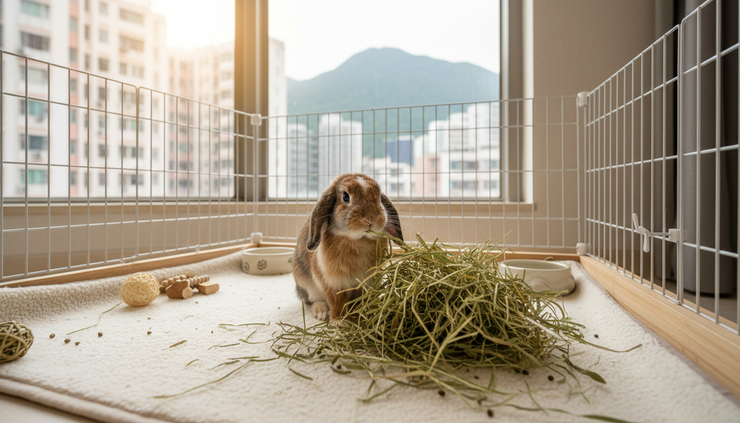
Rabbit Nutrition for Healthy HK Bunnies Starts With Hay
The most important food for a rabbit is not pellets, treats, carrots, or fruit. It is grass hay.
For most adult rabbits, the daily diet should be built around this rough guide:
Food type | Approximate role in the diet | Main purpose |
Grass hay | Around 80% | Dental wear and gut movement |
Leafy greens | Daily portion | Hydration, nutrients, enrichment |
Pellets | Small measured amount | Supplement only |
Treats | Occasional | Bonding and training |
Hay should be available 24 hours a day. A rabbit should be able to eat it whenever it wants, not just at set meal times.
The best everyday choice for most adult rabbits is timothy hay. Other grass hays can also be useful, such as orchard grass or meadow hay, especially for rabbits that become bored with one type. Alfalfa hay is richer and higher in calcium, so it is usually reserved for young growing rabbits, pregnant or nursing rabbits, or specific medical situations under veterinary guidance.
Good hay should smell fresh and grassy. It should not smell mouldy, damp, dusty, or sour. In Hong Kong’s humid climate, storage matters. Keep hay in a dry, well-ventilated place. Avoid sealing it in a container that traps moisture. If the hay becomes damp or smells off, throw it away.
A rabbit that eats plenty of hay usually produces good, round droppings and spends much of the day chewing. That is exactly what the body is designed to do.
Why hay protects the teeth and gut
Rabbit teeth grow continuously. This includes the front incisors and the cheek teeth at the back of the mouth. The visible front teeth are only part of the story. Many serious dental problems start with the cheek teeth, where sharp points can develop and cut the tongue or cheeks.
Long-strand hay is valuable because it forces the rabbit to chew from side to side. That grinding motion helps wear the cheek teeth properly. Pellets, by contrast, are crushed much more quickly. They do not provide the same chewing time or the same dental benefit.
This is where rabbit nutrition for healthy HK bunnies and dental care become inseparable. A diet that protects the gut also protects the mouth.
Hay also supports the normal movement of the digestive tract. Rabbits need a steady flow of fibre to keep the gut active. When they eat too little fibre, the gut can slow down. A rabbit with gut slowdown may eat less, pass smaller droppings, sit hunched, or seem quieter than usual. This can become urgent quickly.
If a rabbit stops eating or stops passing droppings, do not wait and watch for a day. Rabbits can deteriorate fast and need prompt veterinary attention.
This article is for general education only. It does not replace an examination by an experienced rabbit veterinarian, especially if appetite, droppings, teeth, weight, or behaviour have changed.

Leafy greens are the fresh part of the plate
Rabbits are built to eat fibrous plant material, and leafy greens are a useful daily part of the diet. They add moisture, texture, nutrients, and variety.
In Hong Kong, many suitable greens are easy to find. Good options often include:
Bok choy
Choy sum
Celery tops and celery leaves
Romaine lettuce
Coriander
Basil
Mint
Wheatgrass or fresh grass grown safely at home
Fresh grass can be excellent, but only if it is clean and safe. Do not feed grass from roadsides, public parks, pesticide-treated areas, or places where dogs may have passed urine or faeces. For many indoor rabbits, home-grown trays of grass are the safer choice.
Introduce greens gradually. A rabbit that has eaten mostly pellets may develop soft stools if given a large bowl of vegetables suddenly. Start with a small amount of one green, watch the droppings, then build up over several days.
Wash greens well and shake off excess water. A little moisture is fine and may even support hydration, but soggy vegetables left in a warm flat can spoil quickly.
Greens that need caution
Some foods are not poisonous in tiny amounts but are easy to overfeed. These should not become daily staples.
Use caution with:
Kale
Spinach
Parsley
Sweet peppers
Carrot tops
Broccoli leaves
These can suit some rabbits, but portion size and individual tolerance matter. Rabbits with bladder sludge, urinary calcium issues, a sensitive gut, or a history of soft stools may need a more specific plan.
Iceberg lettuce should be avoided because it offers little nutritional value and can upset some rabbits. Onion, garlic, cooked food, biscuits, bread, chocolate, avocado, and human snacks should never be part of a rabbit’s diet.
Pellets are the common trap in Hong Kong homes
Many pet shop shelves make pellets look like the main food for rabbits. That is misleading.
Pellets are concentrated. They are easy to eat quickly, high in energy compared with hay, and often far more tempting than fibre. If a bowl is always full, many rabbits choose pellets first and hay second. That choice can lead to weight gain, poor dental wear, and lower fibre intake.
For a healthy adult rabbit, pellets should be a small measured supplement, not the main meal. Choose plain, uniform pellets rather than colourful mixes with seeds, corn, dried fruit, flakes, or crunchy pieces. Mixed foods encourage selective feeding, where the rabbit picks the sweet or starchy parts and leaves the healthier pieces behind.
A good pellet should be hay-based and high in fibre. Avoid muesli-style mixes. Avoid “gourmet” formulas that look attractive to humans but do not match rabbit biology.
The right amount depends on body weight, age, activity level, neuter status, and medical history. As a general principle, feed less than most packaging suggests, unless a veterinarian has recommended otherwise. Many indoor rabbits in Hong Kong flats need fewer calories than owners expect.
How to reduce pellets safely
If a rabbit currently eats a large amount of pellets, do not remove them all overnight. Change the diet gradually.
A sensible approach is:
Measure the current amount
Find out what the rabbit actually eats each day.
Improve hay quality first
Offer fresh timothy hay in several places. Make hay easy to access and pleasant to eat.
Reduce pellets step by step
Cut down slowly while watching appetite, droppings, mood, and weight.
Add greens gradually
Introduce one safe leafy green at a time.
Book a check if eating changes
A rabbit that refuses hay may have dental pain, not just fussiness.
This is where an experienced rabbit veterinarian can make a real difference. Dr Gerry has years of experience as a Rabbit veterinarian and his consultations often focus on the practical details behind appetite, tooth wear, droppings, and safe diet correction.

Fruit and treats should stay small
Rabbits enjoy sweet foods, but enjoyment is not the same as suitability. Fruit, dried fruit, carrot, and commercial treat sticks can create problems when used too often.
Sugary foods can reduce hay intake and affect the delicate balance of the gut. They also add calories quickly. A small rabbit does not need much extra energy to gain weight.
If treats are used, keep them tiny. A small piece of apple, a sliver of banana, or a little carrot can be used occasionally. For many rabbits, a fresh herb leaf works just as well for bonding and training.
Good non-food enrichment is often better than edible treats. Natural woven chew toys, hay-stuffed cardboard rolls, untreated willow items, and safe digging boxes can keep rabbits busy without adding sugar.
Chewing toys do not replace hay, but they help provide activity. Avoid painted wood, unknown timber, glue-heavy toys, plastic pieces that can be swallowed, and anything with small parts that may cause obstruction.
A practical daily feeding routine for an HK rabbit
A good rabbit routine does not need to be complicated. It needs to be consistent.
A healthy adult rabbit’s day may look like this:
Morning
Give fresh hay and remove any stale or soiled hay. Offer a measured portion of leafy greens. Refresh the water bowl.
Midday or afternoon
Check droppings, hay intake, and general behaviour. Top up hay if needed. In warm months, make sure water is fresh and the enclosure is well ventilated.
Evening
Offer a small measured pellet portion, if pellets are part of the plan. Add more hay before bedtime. Rabbits often eat a great deal overnight.
Use a heavy ceramic water bowl rather than relying only on a bottle. Many rabbits drink more naturally from a bowl. Keep the bowl clean, and place it where bedding or litter will not be kicked into it.
Hay placement can also improve intake. Try putting hay:
In or near the litter tray
In a hay rack at head height
Inside a cardboard box with safe openings
In several smaller piles around the enclosure
Rabbits like to browse. Making hay part of their environment often works better than placing one neat pile in a corner.
When picky eating may be a medical sign
Many owners describe their rabbit as “fussy”. Sometimes that is true. Often, the rabbit is telling us something.
A rabbit that eats pellets but refuses hay may have sore cheek teeth. A rabbit that drops food, chews slowly, or has wet fur under the chin may have mouth pain. A rabbit that suddenly prefers soft vegetables may be avoiding the hard work of chewing hay.
Watch for these warning signs:
Eating less hay than usual
Smaller, fewer, or misshapen droppings
Saliva or wet fur around the mouth
Weight loss despite eating
Selective eating
Bad breath
A lumpy jawline
Eye discharge on one side
Sitting hunched or grinding teeth
Do not try to solve these signs with treats or appetite coaxing alone. A proper oral examination is needed. Some dental disease cannot be seen just by looking at the front teeth.
Early treatment is kinder, safer, and often less complex than waiting until the rabbit stops eating.

Dr Gerry’s recommended rabbit feeding supplies
A well-stocked rabbit home makes good feeding much easier. These are the core items I recommend keeping on hand.
Premium dust-free timothy hay in bulk packs
Bulk hay is often better value, especially for multi-rabbit households. The key is freshness. Choose hay that is greenish, fragrant, and low in dust. Store it carefully in Hong Kong humidity.
Oxbow Critical Care emergency recovery food
This is a recovery food used when rabbits need assisted feeding, often during illness or after dental or gut problems. Keep it available, but use it with veterinary advice. If a rabbit is not eating, the cause must be checked. Assisted feeding may be unsafe in some situations, such as suspected obstruction.
Rabbit-safe natural woven chew toys
Choose untreated, rabbit-safe materials. Woven chew toys, hay mats, willow balls, and grass tunnels can support normal chewing behaviour and reduce boredom.
These supplies do not replace the basics. The best rabbit diet still starts with hay, fresh greens, sensible pellet control, and close observation.
The feeding mistakes I see most often
The same mistakes appear again and again in rabbit consultations.
The first is feeding too many pellets. This is common because pellets are convenient and rabbits like them. The result is often a rabbit that looks healthy from the outside but has poor hay intake.
The second is offering too many sweet treats. Rabbits learn quickly. If fruit appears every time they refuse hay, they will keep refusing hay.
The third is changing the diet too quickly. A rabbit gut likes routine. Any major change should be gradual unless a veterinarian gives specific instructions.
The fourth is assuming front teeth tell the whole story. The incisors may look fine while the cheek teeth are causing pain.
The fifth is buying hay only by appearance. Some very green hay is too rich for certain rabbits, while some paler hay may be perfectly useful if it is clean, fragrant, and fibrous. The rabbit’s appetite, droppings, and health matter more than colour alone.
The healthiest plate is simple
A healthy Hong Kong rabbit does not need a complicated menu. The gold standard is beautifully simple.
Keep grass hay available at all times. Add safe leafy greens daily. Feed plain pellets in small measured amounts. Use fruit and commercial treats rarely. Provide safe chew toys for enrichment, but never as a substitute for hay.
Most of all, watch the rabbit in front of you. Droppings, appetite, chewing style, and body weight tell an experienced eye a great deal. When these change, act early.
The best rabbit feeding plan is not built around what looks appealing in a packet. It is built around how rabbits are made to live: chewing fibre, moving the gut, wearing the teeth, and eating steadily throughout the day.


Comments